
Building a Kinder Future: How Award-Winning Educator Rachel Friend Inspires Empathy Through Hope for the Herd
When it comes to putting humane education into practice, few lead with as much heart and vision as Rachel Friend. An Association for Professional Humane Educators Humane Educator of the Year award winner and a dedicated leader of multiple LivingKind Youth Changemaker Clubs (YCCs), Rachel has consistently shown what happens when young people are empowered to advocate for animals and their communities.
To bring meaningful, deep learning experiences about elephants in the classroom, Rachel partnered with the team at Global Sanctuary for Elephants to create Hope for the Herd, a humane education curriculum designed to help young learners see animals as individuals with rich emotional lives. We invited Rachel to reflect on how her students connected with these gentle giants, how they navigated moments of real-world grief and healing, and her advice for fellow YCC leaders and teachers looking to spark compassion in their own classrooms.
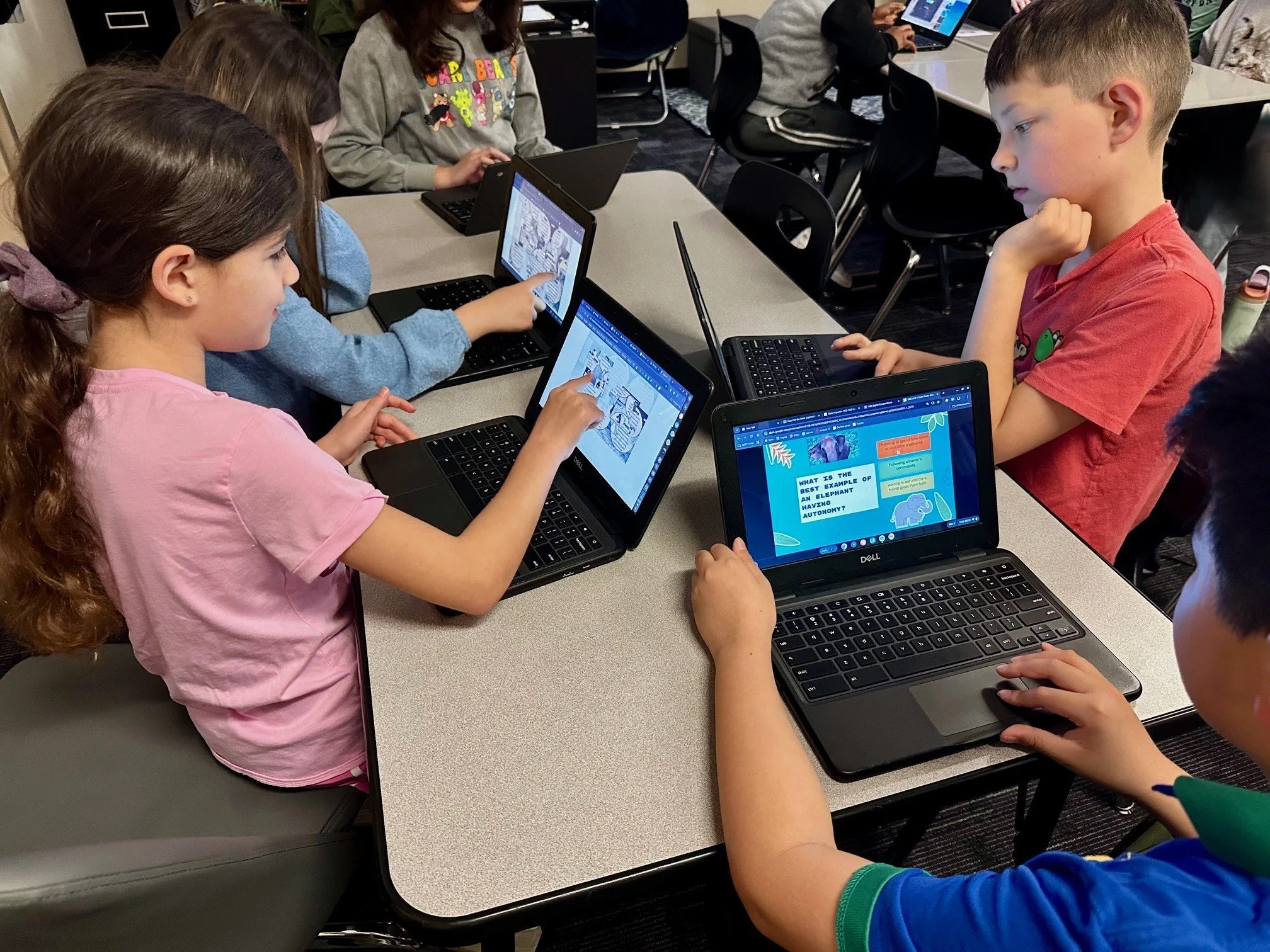
Students learning from Hope for the Herd activities.
What inspired you to create Hope for the Herd, and what was your process like in bringing this humane education curriculum to life?
I was inspired to create Hope for the Herd after learning about the incredible people at Global Sanctuary for Elephants (GSE) and the amazing work they do at Elephant Sanctuary Brazil to help captive elephants heal from their trauma. I collaborated with the team at GSE by creating engaging lessons and interactive activities that support their mission. During the process, we worked closely to ensure the content was developmentally appropriate and aligned to standards. I then piloted the curriculum with my students who unanimously gave it the green light!
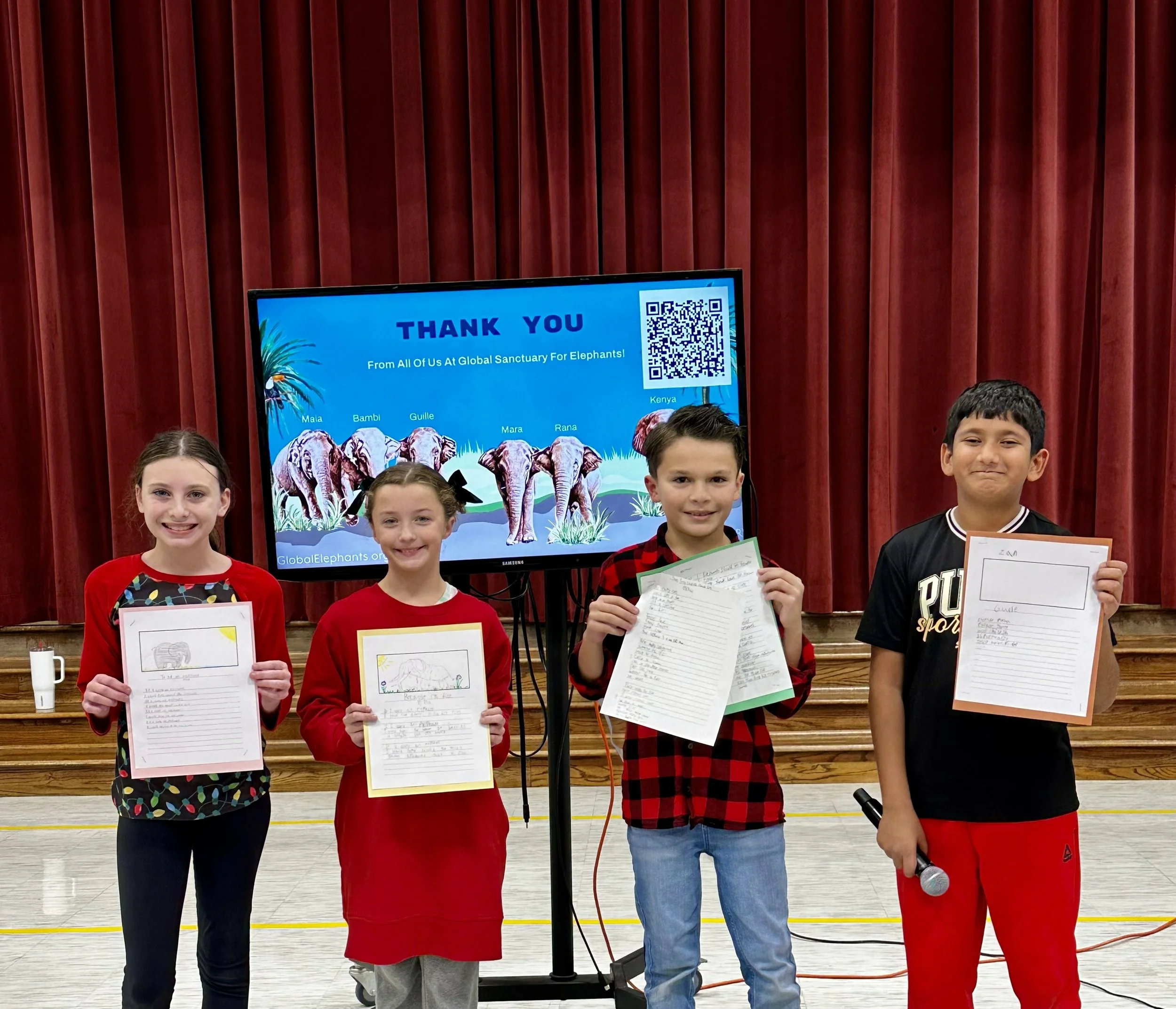
Students sharing their poetry about elephants and captivity.
What is one memorable story or unexpected reaction from a student during a session that surprised or moved you as an educator?
This past school year, our Youth Changemaker Club (YCC) decided to host a poetry reading fundraiser to support GSE. The students sold handmade ornaments, shared a presentation, and read their poems. The day before the reading, we received the heartbreaking news that Kenya, a recently rescued African elephant at Elephant Sanctuary Brazil, had died. Just two months earlier, Pupy, also an African elephant, had passed away. Although both elephants had finally reached sanctuary, the years of physical damage caused by captivity proved too severe, and they ultimately succumbed to complications from their past. During their short time at Elephant Sanctuary Brazil, they slowly developed the beginning of a sweet friendship on their own terms. One of my students wrote a poem about them and had drawn Pupy as an angel wearing a halo. Upon hearing the sad news, she decided to revise her illustration, adding angel wings and a halo to Kenya and included a last line in her poem: “Kenya and Pupy will be friends forever.” It made me realize the importance of giving students space to grieve and process grief in their own way. It was really beautiful how she chose to honor them. The poetry reading event was such a special evening for all of us, including the families. It was just so moving to see how much compassion and empathy the students had for the elephants and the pride they felt for making a difference for them.
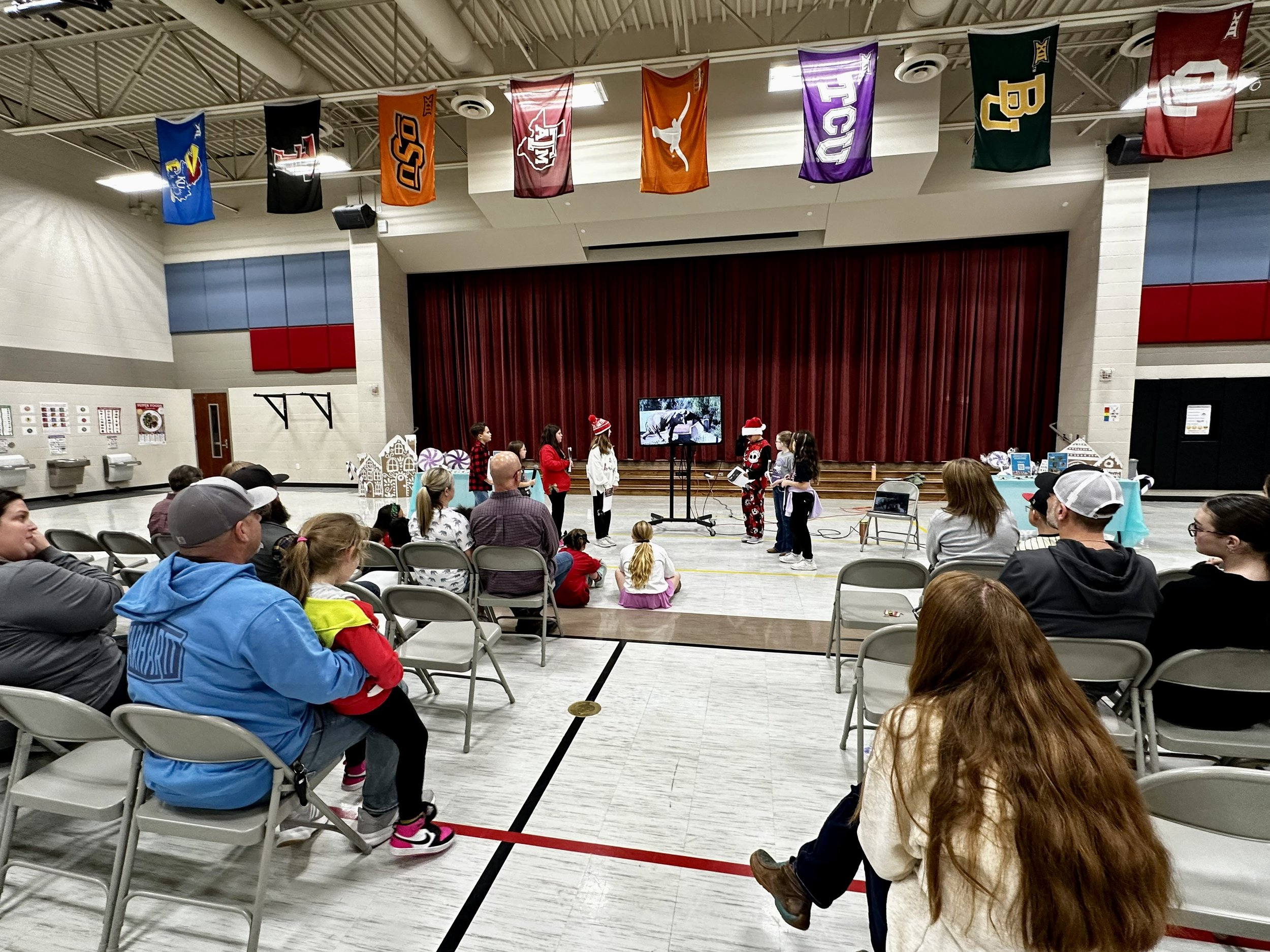
Parents learning from young animal advocates and raising funds for elephants.
When teaching about animals with such rich emotional landscapes, how do you help students step beyond human perspectives to imagine what it truly feels like to navigate the world as an elephant? What do you think the elephants would want kids to understand about them?
I help students step beyond human perspectives by helping them learn who elephants are so they can connect and identify with them. In the student digital journal, students explore what life is like in the sanctuary, as well as learn about elephant culture, and the special elephants who reside at Elephant Sanctuary Brazil. In one activity, students learn about the social differences between Asian and African elephants and take a survey to see which one they are more like. I think elephants would want kids to understand that we are more alike than different. They want to have choices about how they spend their days and with whom they interact. I also think elephants would want kids to understand that they experience emotions and have unique personalities just like them!
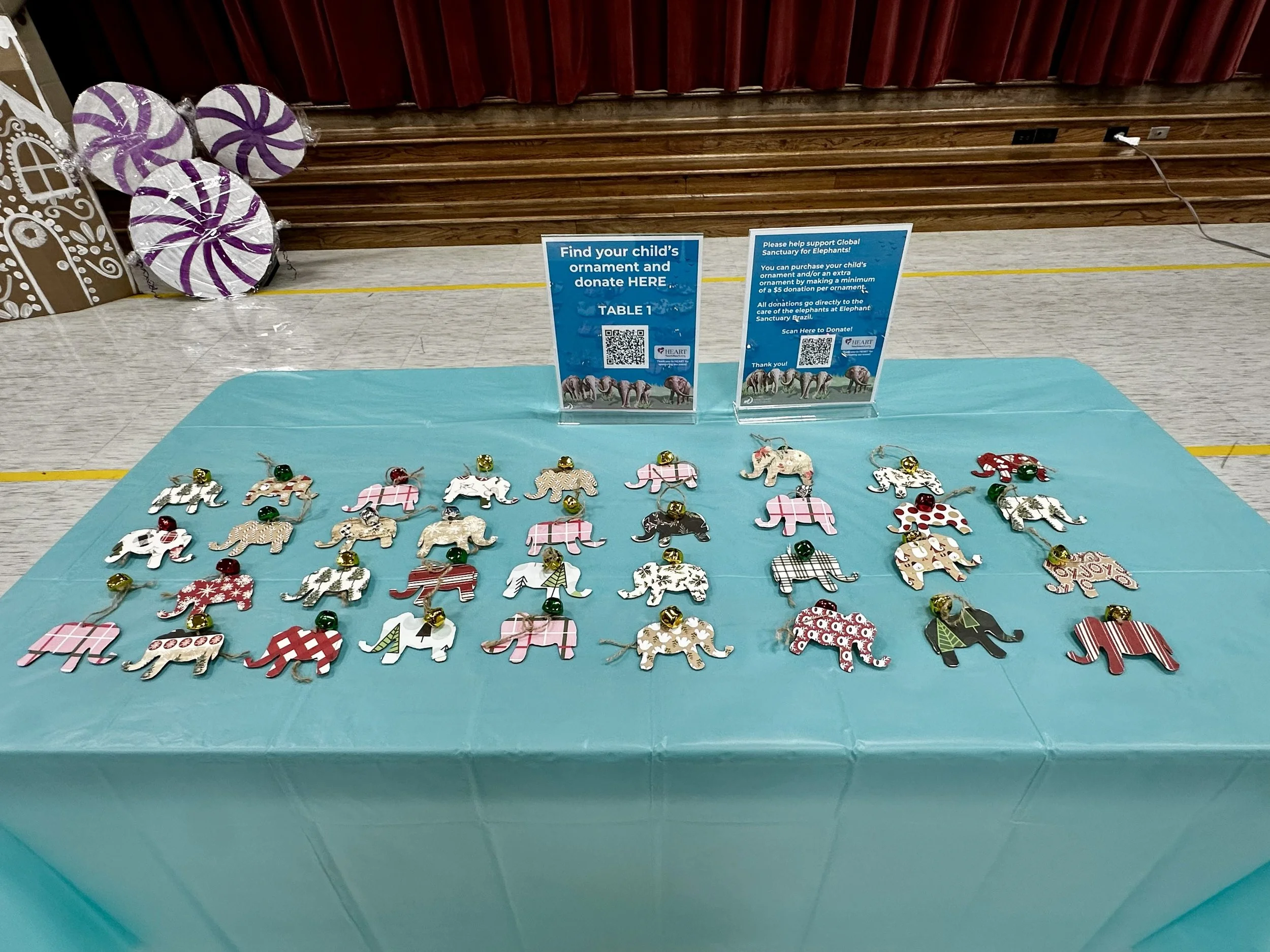
Student-crafted elephant ornaments created to support healing and sanctuary care for rescued elephants.
What advice would you give to a teacher hoping to integrate more humane education into their own classroom or even create their own curricula the way you have?
My advice to a teacher hoping to integrate more humane education into their own classroom is to first listen to what their students are passionate about. Then, provide them with meaningful learning opportunities that allow them to speak up for issues they find important. Last, put their learning into action for an authentic audience. If a teacher is looking to create their own curricula, my advice would be to start with an outcome and connect the learning to standards. From there, create engaging activities that allow students to collaborate and later present their learning. It’s okay to start small, and let it grow!
For teachers looking for a way to have more time or autonomy, consider sponsoring a YCC after school! LivingKind provides an amazing handbook that guides teachers through every step, while giving them and their students the tools to build a close community and create an impactful project of their own. Teachers, kids, and families love YCC!
If Hope for the Herd is a blueprint for empathy, what kind of world do you envision these 3rd–6th graders building 10 years from now because they learned to see animals as individuals?
The kind of world I envision these kids building 10 years from now because they learned to see animals as individuals is one where they use their voices for positive change by speaking up for those who can’t and continuing to share what they have learned with others in a compassionate way. I also envision them collaborating respectfully with those who may not share their viewpoints by working together to find a solution that is best for an animal’s needs. There is definitely hope for a more empathetic world with these inspiring kids leading the way!
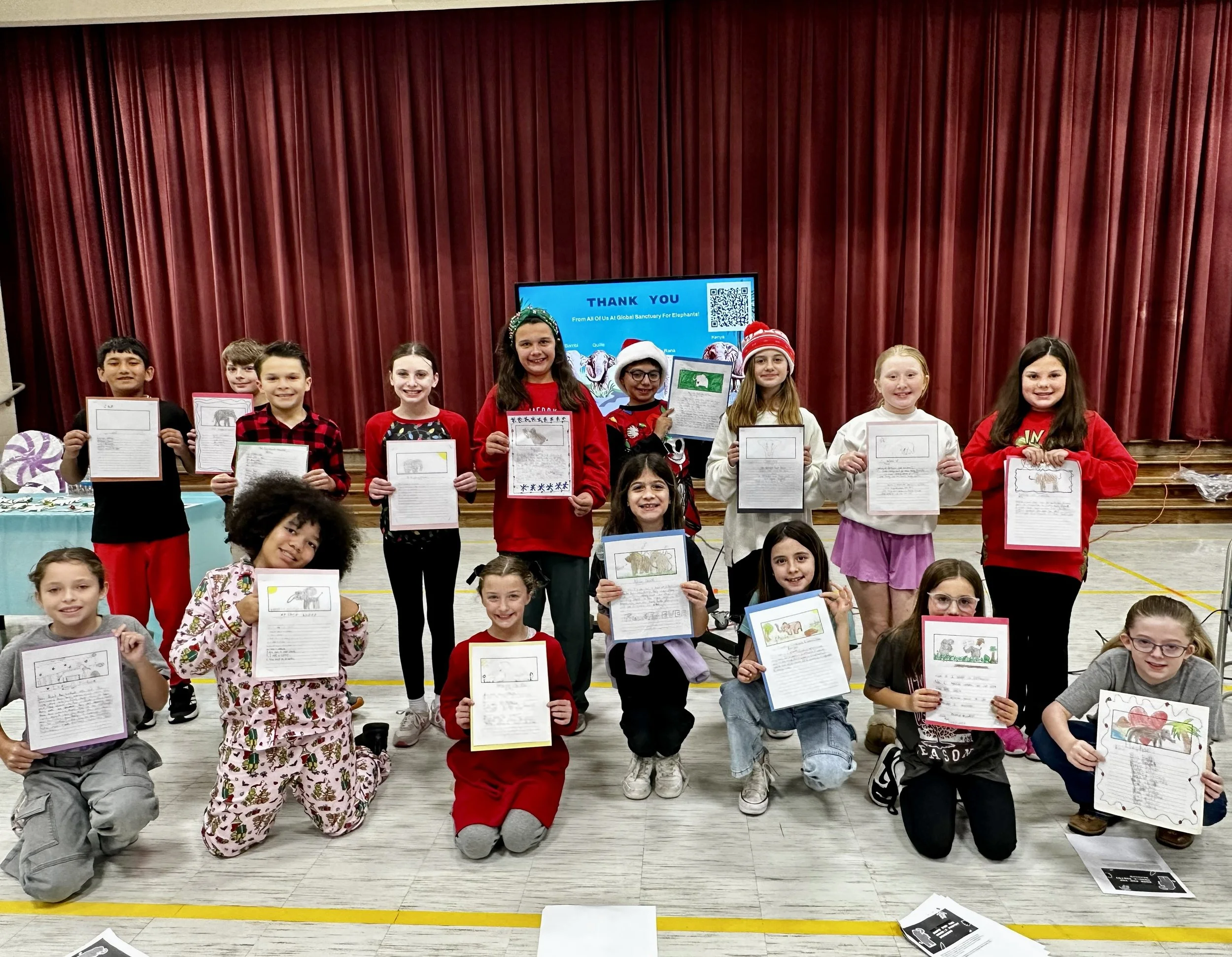
Celebrating poetry, compassion, and action: students pose with the poems they recited to support Global Sanctuary for Elephants.
Whether you're a Youth Changemaker Club leader, classroom teacher, or parent, we encourage you to check out Hope for the Herd! Access all free student materials, interactive digital journals, and lesson plans directly on the Global Sanctuary for Elephants Elephant Education Resources page. Download the curriculum today and spark compassion in your learning space!
If Rachel’s incredible impact has inspired you to want to start your own Youth Changemaker Club start here: living-kind.org/ycc