
The Many Paths to Becoming a Humane Educator
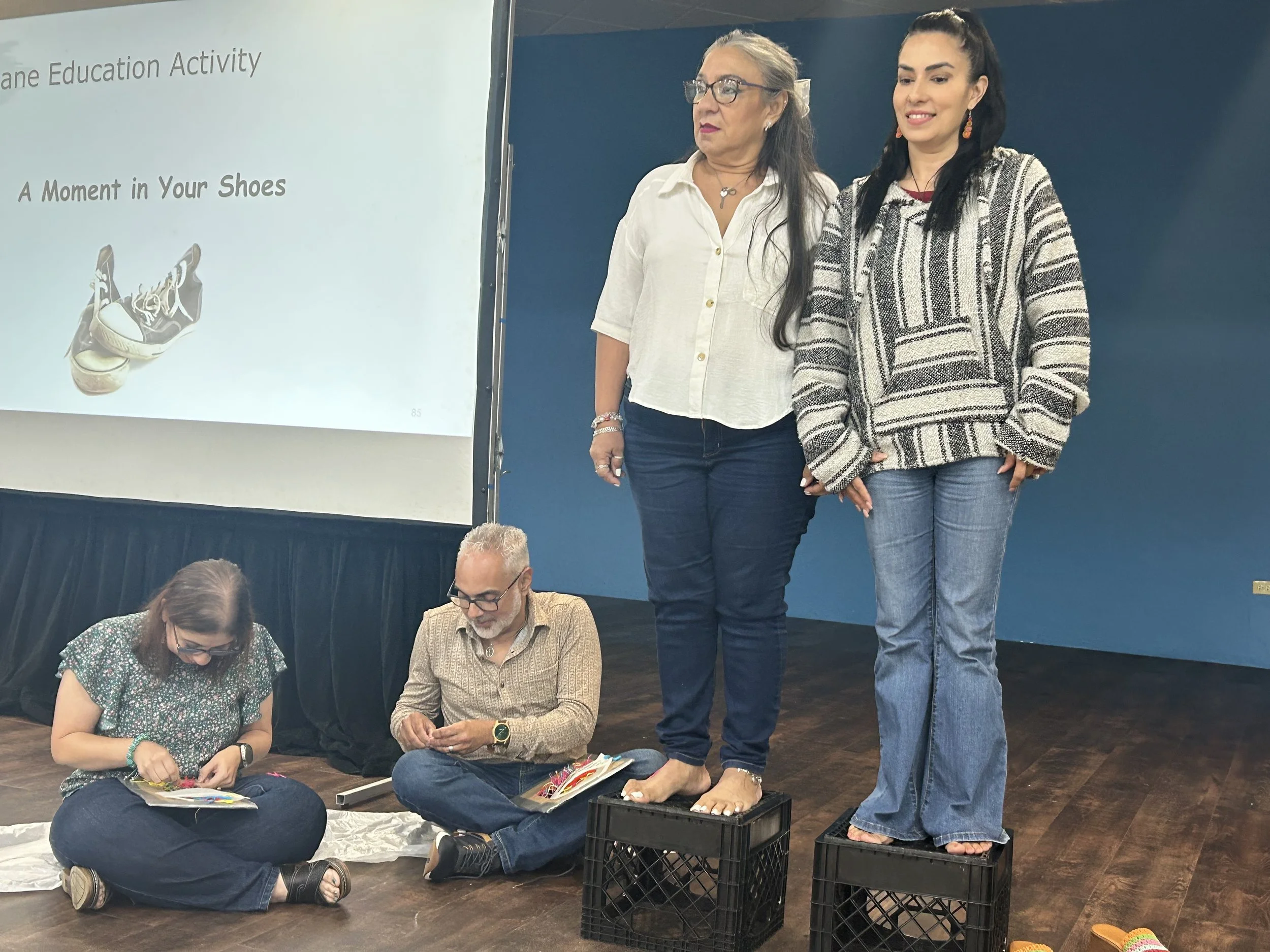
Educators in Puerto Rico exploring new ways to integrate humane learning into their classrooms.
by Jeannie Russell
Are you looking for guidance in developing lessons and activities that meaningfully integrate real-world issues and empowering solutions into the curriculum or programming of your classroom or youth group?
Humane education resources and teaching methods provide a comprehensive approach for teachers and youth instructors who are passionate about addressing the most pressing issues of our time with their students within a framework that centers equity and justice concerns, supports core social-emotional competencies, and reflects the deep interdependence of people and animals within the living natural world that sustains us all. By highlighting the interdependence and connections among all living beings, humane education offers a distinctive lens for exploring such critical topics as climate change and myriad other environmental challenges arising from our industrialized infrastructure, exploitation in the working conditions and daily lives of Indigenous and other marginalized groups, threats to the continued existence of plant and animal species around the globe, and establishment of humane standards of care for animals domesticated for companionship or use.
Are you ready to take the next step and consider formal training and certification as a humane educator? Educators who are drawn to the humane education model come from many different backgrounds and serve in a wide range of traditional classroom and non-traditional educational settings for all age levels, and as such, there are many paths to becoming either a full-time humane educator or gaining proficiency in bringing the humane education framework into classrooms and other youth educational settings.
Here are some resources appropriate for the different levels of engagement with humane education that you may be considering:
Formal Training and Certification:
There are a number of stand-alone educational institutions, as well as undergraduate and graduate level college programs, that provide formal training and certification in Humane Education.
The Institute for Humane Education (IHE) offers resources and online M.Ed., M.A., Ed.D., and Graduate Certificate programs in humane education. They state that “...graduates from our graduate program in humane education work as change-makers in many different fields. Graduates teach at all levels of education; work for non-profit organizations as leaders and outreach educators; bring about cultural transformation through the arts, media, business, and technology; and have launched entrepreneurial initiatives.” The IHE site is also a great place to find guidebooks, lesson plans, and curricula that provide tools for educators to teach about social justice, environmental sustainability, and animal protection, and that promote "solutionary" thinking and action.
LivingKind offers an online credentialing program for educators working to infuse inclusive social justice into all academic fields, as well as consulting and other resources for education professionals looking to bring student-centered learning, humane pedagogy, social and emotional growth, and critical thinking into their work. The Academy offers a “…premier humane education credentialing program, the only national registry of humane education specialists, and helps clients achieve their goals by providing the professional development, curriculum frameworks, and guidance they need in order to be successful.” Their program includes courses in humane and pro-social education, self-care for people in the helping professions, and leadership and volunteer management.
The Institute for Human-Animal Connections (IHAC) is located within the University of Denver system, and offers four professional development certificates and a Master of Social Work (MSW) Human-Animal-Environment Interaction certificate (HAEI-SW) in conjunction with the University of Denver’s Master of Social Work degree program. Their professional development certificates include a Humane Education Practitioner Certificate (CHEP), as well as certificates in Animals and Human Health, Canine-Assisted Interventions, and Equine-Assisted Mental Health Practice. IHAC educational programs “…focus on helping professionals increase their understanding of animal behavior and human-animal-environment interactions and enhance their clinical practice working in partnership with animals… centering ethics and animal welfare in all of our educational programs.”
Madonna College offers an online Masters of Science degree in Humane Leadership (MSHL). Based on exploring the interconnectedness of social justice, environmental sustainability, and animal protection, the Madonna MSHL Program “…prepare(s) you to assume a role of a leader, community organizer, consultant or educator in a variety of professional settings (non-profit organizations, businesses, governmental agencies, churches, and post-secondary educational institutions) geared toward developing practical solutions to current challenges affecting the well-being of people, the environment, and animals.” The program of study includes two professional certificates in the field, and includes experience conducting community-based service learning projects.
Canisius College offers a Humane Education elective as part of their MS Degree in Anthrozoology. The masters program is designed to allow students “… to explore human-nonhuman interactions in a variety of contexts including the extraordinary relationships that exist between people and companion animals; humans’ interactions with and attitudes toward wildlife; the roles of zoos and sanctuaries; policies and laws that permit instrumental and industrialized uses of nonhuman animals; and a wide range of environmental and conservation issues.” It is conducted in a modified online format, with a four-day on-site set of workshops and meetings at the beginning of each semester, followed by online completion of coursework.
Coursework and Concentrations:
The following are a few of the graduate and undergraduate programs that have offered courses or concentrations in humane education in the past. Those who are interested in exploring their current humane ed offerings should reach out to the institutions directly.
Webinars, Online Resources, and Consultation:
As noted above, both the Institute for Humane Education has free lessons, activities, and articles available on their website ready to turn-key for use in both traditional classroom and other educational settings.
Our own site here at LivingKind has a wide range of ready-to-use curriculum guides, humane-themed books, webinars, short virtual lessons and activities, and articles of interest on timely topics, offering both experienced humane educators and newcomers to the field an ever-expanding library of teaching resources. In addition, HEART educators are available for both on-site and online professional development trainings and offer full-semester courses in NYC that can be applied towards a salary differential and credentialing requirements. Individuals who are exploring humane education, and educators with specific questions or who are looking for resources that meet their unique needs, can schedule a one-on-one consultation at no cost with one of our staff members, who are always excited to meet new colleagues and share ideas.
The HEART of Humane Education:
What does it take to become a humane educator? We hope that these great resources can be helpful guideposts for those on one of the many paths that humane education can take, but truly, the journey begins with an open heart and mind, and a willingness to act on behalf of others.
A humane educator - regardless of their professional status or the setting within which they work or care for others - is a teacher in the most inclusive sense, someone who struggles to listen and respond with compassion to the silenced voices within our own human family, who tries to hear and acknowledge the distinctive languages through which the animals that share our world express their complex lives, and who works tirelessly to translate the exquisite symphony of the living earth itself into words and practices that others can understand and use. Humane educators are also parents who teach their children how to care for a family companion animal; neighbors who pick up trash along their street and help to stock a local food pantry; local activists who organize to protect a wildlife preserve; writers and filmmakers who document injustice and exploitation; and children of all ages who reach out to friends who are sad or isolated.
As professional educators, our first and most important job is to ensure that these and so many other different forms of everyday humane thought and action take root in our communities, and shape the lives of all who live there. The humane education programs and resources shared here are all dedicated to furthering this goal, and offer critical tools we need to support our youth in tackling the many complex challenges they will continue to face as they grow. We hope to see you along the journey!